


How Does Copper Clad Steel Help in Lightning Protection Systems?
When lightning strikes a structure, it carries an enormous amount of energy that must be safely conducted into the ground. The materials used for grounding play a critical role in this process. Copper-clad steel (CCS) has become a popular choice for lightning protection systems worldwide due to its unique combination of performance properties.
To understand the value of copper-clad steel, it is first necessary to understand the basic working principle of a lightning protection system. A complete lightning protection system has three main functions: intercepting the lightning strike, conducting the current downward, and dispersing the current safely into the earth. The grounding section is the most critical, because if the current cannot dissipate quickly and safely, it may find alternative paths through wires, pipelines or equipment, causing backflash, step voltage, fire risks or equipment damage. This is why the selection of grounding materials is so important.
Copper clad steel wire performs exceptionally well in lightning protection systems, thanks to several key advantages. The first is electrical conductivity. Lightning is an impulse current with an extremely steep wavefront, which creates a significant skin effect, causing current to flow mainly along the surface of the conductor. The copper outer layer of CCS provides excellent conductivity exactly where it is needed, with most of the lightning current traveling along the copper cladding, while the steel core delivers high-strength mechanical support. This structure allows copper-clad steel to achieve electrical performance close to pure copper at a much lower cost.
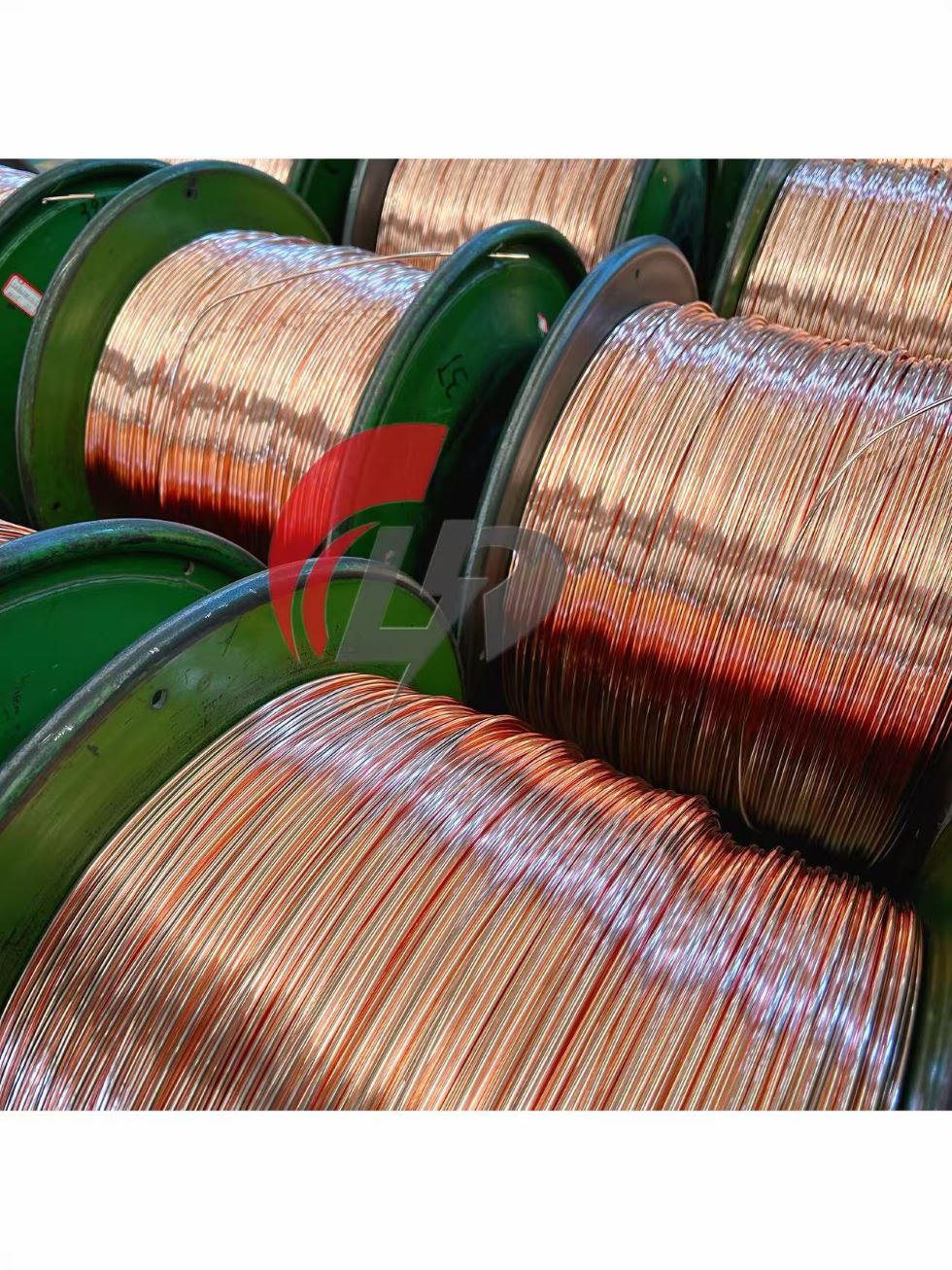
The second advantage is mechanical strength. Pure copper is relatively soft and prone to bending or breaking during installation, especially when driven into rocky or hard soil. Copper-clad steel combines the conductivity of copper with the strength of steel, with a tensile strength approximately two to three times higher than pure copper, making installation easier and more reliable. This benefit is especially important for projects requiring long-distance laying or spanning supports.
Corrosion resistance is another critical factor. Grounding components buried underground are continuously exposed to moisture and soil chemicals. Without sufficient corrosion resistance, the entire lightning protection system will gradually deteriorate. Copper itself offers excellent corrosion resistance, and the outer copper layer of CCS provides corrosion performance close to that of pure copper. The steel core is fully encapsulated and never exposed to the external environment, meaning copper-clad steel ground electrodes can remain stable in corrosive soils for decades.
From a cost perspective, copper prices have risen sharply in recent years. For large-scale projects such as solar power stations and industrial facilities, pure copper grounding can be extremely expensive. Copper-clad steel uses far less copper than solid copper while delivering comparable performance, helping projects control budgets without compromising safety or service life.
In summary, for reliable, durable and cost-effective lightning protection, copper-clad steel offers the best of both worlds: the excellent conductivity and corrosion resistance of copper, plus the high strength of steel. For new construction or system upgrades, copper-clad steel is a grounding material worthy of serious consideration.


